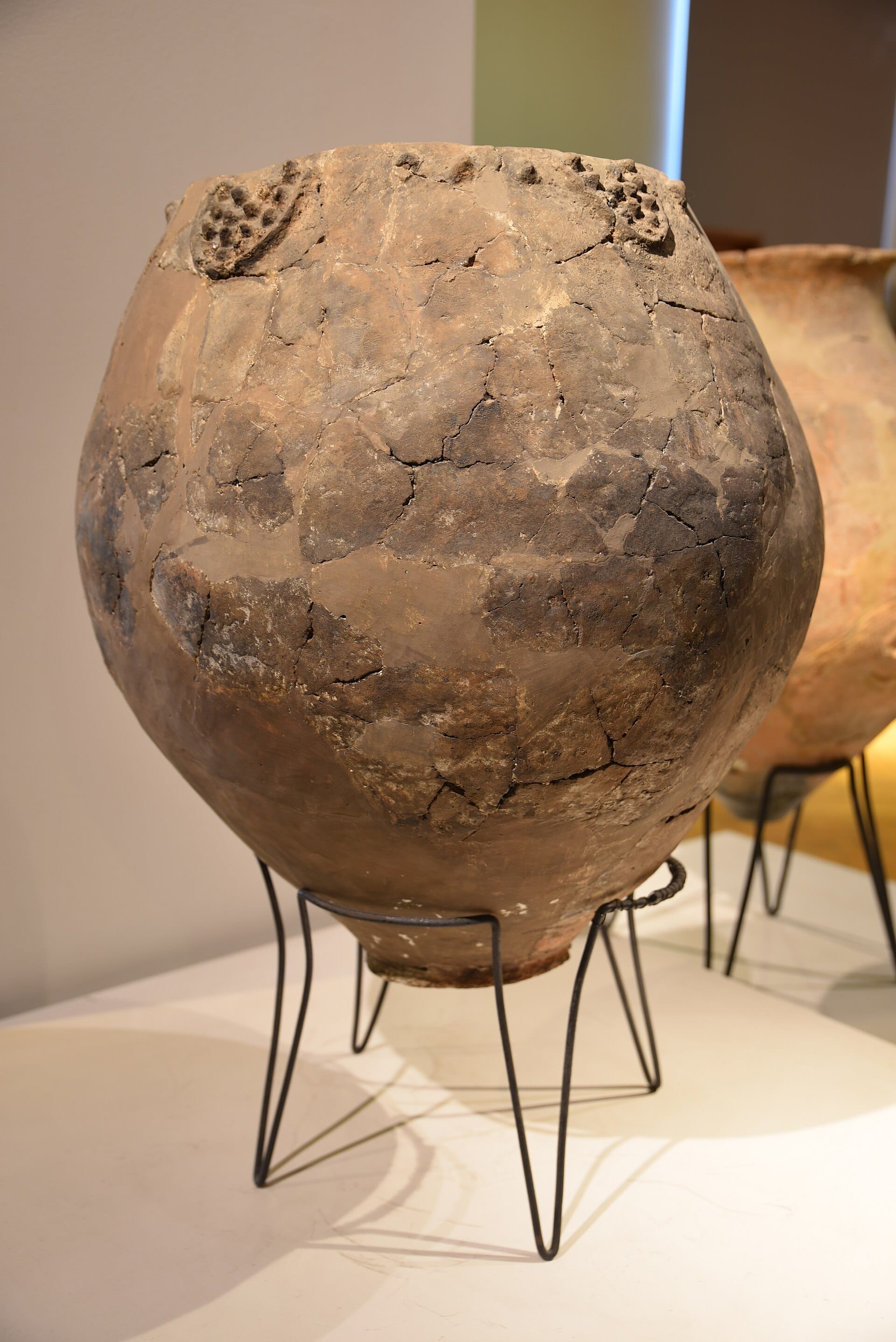
A qvevri is a large, egg-shaped clay vessel, lined with beeswax and buried up to its neck in the floor of a cellar, the marani. Grapes go in with their skins and often their stems, the vessel is sealed, and the earth keeps the temperature steady while the wine ferments and rests.
White grapes made this way take on colour and structure from their skins, which is where the amber wines that have become associated with Georgia come from. The method is slow and physical: qvevri must be cleaned by hand, and making them is a craft of its own.
In 2013 the traditional qvevri winemaking method was inscribed on UNESCO's list of the Intangible Cultural Heritage of Humanity. That recognition matters, but the clearest evidence of the tradition is simpler: in Kakheti, many families still make wine this way for their own table.
To taste it in the place it comes from, with the vineyards in view, is to understand that the method is less a technique than a habit of patience.